Key takeaways
- Commercial yard space is outdoor land rented for vehicle parking, plant, materials, containers or equipment storage, rather than enclosed buildings.
- UK industrial and logistics land remains in short supply, with vacancy rates still historically tight despite recent easing, which keeps demand for flexible outdoor storage strong 1.
- Construction plant and tool theft now costs the UK industry over £800 million a year, making secure, monitored yard space a serious business consideration 3.
- Any commercial use of land, including yard storage, is subject to UK planning rules and permitted use, so checking this before committing to a site matters.
- York Storage offers commercial yard space from £250 per month, subject to permitted use, alongside 24/7 access and monitored CCTV at its Shipton by Beningbrough site north of York.
What is commercial yard space?
Commercial yard space is an outdoor area of land that a business rents to store, park or operate from, rather than renting an enclosed warehouse or office. It is usually a hardstanding or compound area, sometimes fenced or secured, and let out as a distinct plot or section within a larger site.
Unlike indoor storage units, yard space is designed for items that can sit outside, or that are simply too large, heavy or awkward to fit through a standard doorway. This makes it a flexible option for businesses that need somewhere to keep vehicles, plant, containers or bulk materials without paying for the overheads of a conventional commercial building.
Yard space is typically let on simple commercial terms, often month to month or on short rolling agreements, which suits businesses whose storage needs change with the season or with the size of their current workload. It sits between self storage, which is usually indoor and for smaller volumes, and full industrial units, which come with roofs, power and internal floor space.
Typical uses for yard space
Businesses rent yard space for a wide range of purposes, and most sites will see a mix of the following uses operating side by side.
- Parking for vans, HGVs, trailers and company fleet vehicles when off duty
- Storage of plant and machinery such as diggers, dumpers, generators and compressors
- Stockpiling of building materials, aggregates, timber, pipework or scaffolding
- Storing shipping or steel containers used as mobile stores or site offices
- Keeping seasonal stock, landscaping supplies or horticultural equipment
- Parking recovery vehicles, caravans or specialist trailers
- Staging areas for contractors between jobs or during a project
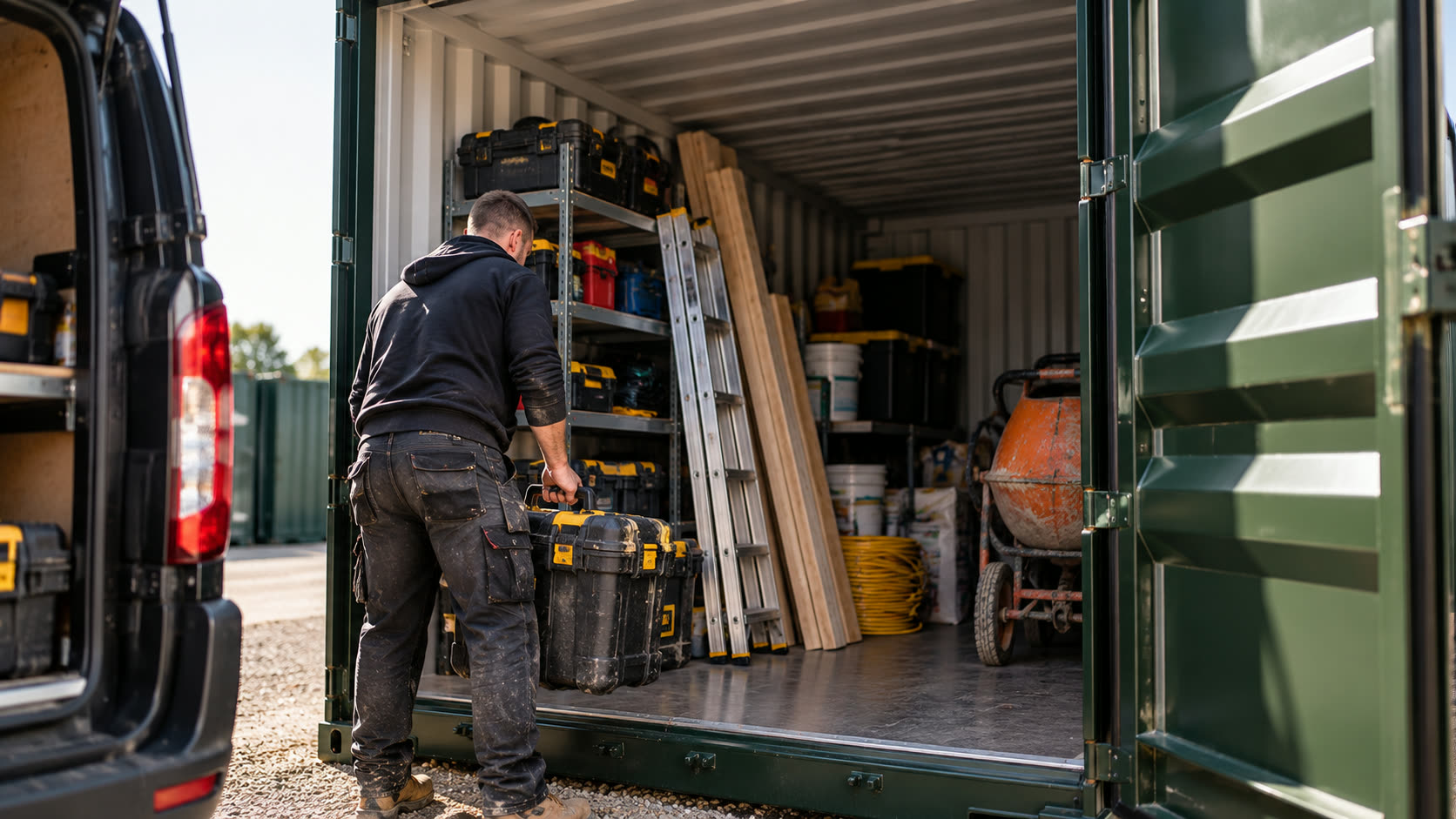
Construction and trades businesses are among the heaviest users of yard space, because they regularly need somewhere secure to leave plant, materials and vehicles overnight or between contracts, without the cost of running a full depot.
Who typically rents yard space
- Builders, groundworkers and civil engineering contractors
- Landscaping and tree surgery businesses
- Vehicle recovery and haulage operators
- Market traders and event companies storing stalls or equipment
- Online retailers and small logistics businesses needing container storage
- Farmers and rural businesses needing overflow parking or storage
Access considerations
Access is one of the most important practical factors when choosing a yard, because the wrong layout can make day to day operations slow and frustrating. It is worth thinking through the following before signing up to any site.
Vehicle movement
If you run HGVs, long trailers or large vans, check that the yard has enough room to turn, reverse and manoeuvre safely. A tight site that works for a transit van may be unworkable for an articulated lorry or a low loader carrying plant.
Surface and ground conditions
The surface a yard is laid on affects how usable it is in wet weather and how much wear heavy vehicles or static containers will cause over time. It is sensible to ask directly about ground conditions for your specific site, as this varies between yards.
Opening hours
Trades and haulage businesses often need to collect materials or move vehicles outside normal office hours, early in the morning or late in the evening. Confirming access hours in advance avoids disruption to your working pattern.
Security
Given the value of plant, tools and materials typically stored in yards, security measures such as CCTV coverage and secure locking arrangements are a key consideration, particularly as organised theft from construction sites and yards remains a significant and growing problem across the UK 5.
| Consideration | Why it matters |
|---|---|
| Turning space | Determines whether HGVs, trailers or long plant can manoeuvre safely |
| Access hours | Affects whether you can collect or drop off outside normal working hours |
| Surface type | Influences usability in wet weather and wear on vehicles or equipment |
| Security measures | Reduces the risk of theft of plant, tools and materials |
| Distance to site | Affects daily travel time to and from jobs or depots |
Security and the cost of plant theft
Security is not a minor detail when it comes to yard storage. Plant, tools and vehicles are high value, portable and often left unattended overnight, which makes them an attractive target for organised crime.
Industry sources estimate that theft of tools, plant and equipment costs the UK construction sector over £800 million a year once replacement costs, hire of substitute equipment and project delays are taken into account 3. Some analysis puts the wider annual cost, including indirect losses such as insurance premium rises and lost productivity, at closer to £1 billion 2.
Factors commonly cited as driving this include the high resale value of machinery, the ease with which stolen items can be sold on, and gaps in security at sites that are left unattended overnight 4. This is why features such as monitored CCTV and discreet, concealed lock boxes are worth prioritising when choosing where to keep valuable plant, tools or vehicles.
Planning and permitted use, in general terms
In the UK, how land can be used commercially is governed by the planning system, and this applies to yard space just as it does to buildings. Land and premises are generally assigned a use class under planning law, and open storage or distribution style uses commonly fall under classes such as B8, which broadly covers storage and distribution.
In practice, this means that not every piece of land can simply be used as a commercial yard without the correct planning position in place. A plot may need to have the relevant permitted use, or a specific planning permission, before it can lawfully be used for storing vehicles, plant, containers or materials on a commercial basis.
This is particularly relevant for yard space, because many sites started life with a different designated use, such as agricultural land, and converting that to commercial storage use is not always straightforward or guaranteed. Before committing to a yard, it is sensible to ask whoever manages the site to confirm that the use you intend is covered by the site's permitted use.
- Commercial storage and distribution uses generally sit within use class B8 in England
- Changing land from one use to another can require planning permission or confirmation of lawful use
- Sites let for commercial yard purposes should have a permitted use that covers storage activity
- Specific restrictions can apply, such as limits on hours, noise or the types of goods stored
Why demand for yard space is strong
Demand for outdoor industrial storage, sometimes called industrial open storage or industrial outdoor storage, has grown as a distinct property category in recent years, driven by occupiers across construction, logistics, e-commerce and transport who need flexible, secure land rather than expensive built space 1.
Across the wider UK industrial and logistics market, vacancy has crept up from historic lows but remains tight by long run standards, with overall industrial vacancy around 4.7% in autumn 2024, still below many other commercial property sectors 1. Logistics specific vacancy was reported at 6.95% in mid 2024, a level still considered historically tight by surveyors 4.
This broader shortage of industrial and open storage land filters down to local markets too. Businesses that previously might have rented a full industrial unit are increasingly looking at yard space as a cheaper, more flexible way to get the outdoor storage capacity they need, particularly for vehicles, plant and materials that do not require a roof.
For businesses based in and around York, this national pattern of tight industrial supply means that well located, secure yard space within easy reach of the city and its surrounding road network is a genuinely useful resource, rather than simply a cheaper fallback option.
Who commercial yard space suits
Yard space is not the right answer for every business, but it suits a specific set of needs very well. It tends to work best for businesses that need outdoor capacity rather than indoor floor space, and that value flexibility over a long lease commitment.
- Trades and construction businesses needing overnight parking and plant storage
- Haulage, recovery and logistics operators with vehicles or trailers to park
- Businesses using containers as mobile stores, workshops or site offices
- Landscapers, groundworkers and agricultural contractors with bulky equipment
- Growing businesses that need extra capacity without committing to a long lease on a full unit
- Businesses storing seasonal stock, market stalls or event equipment
It is generally less suitable for storing items that need climate control, that must stay completely dry, or that require constant staff access throughout the working day, since these needs are better met by an indoor unit or workshop.
Containers and mobile storage on a yard
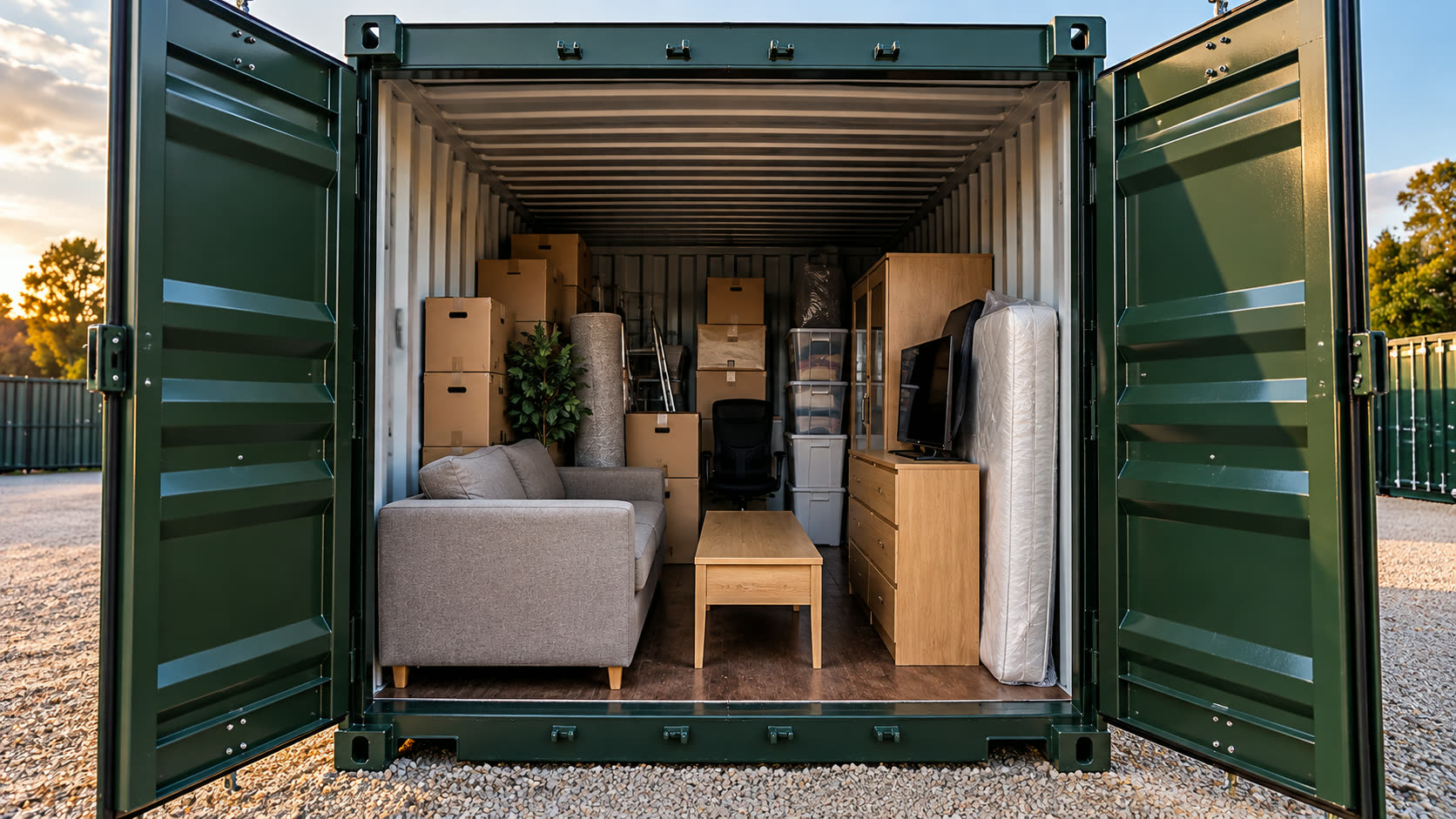
Many businesses combine yard space with a storage container, using the container as a secure, weatherproof store for tools, stock or documents while the surrounding yard holds vehicles, plant or bulk materials. This combination gives a practical middle ground between fully open storage and a full indoor unit.
York Storage offers drive-up containers measuring 20ft by 8ft by 8ft for £140 per month, with a 2 month minimum term, alongside its commercial yard space. These containers can be rented on their own or used alongside a yard plot, giving businesses a way to keep smaller valuable items secure while larger plant and vehicles sit out on the yard itself.
| Option | Details |
|---|---|
| Drive-up container | 20ft x 8ft x 8ft, £140 per month, 2 month minimum term |
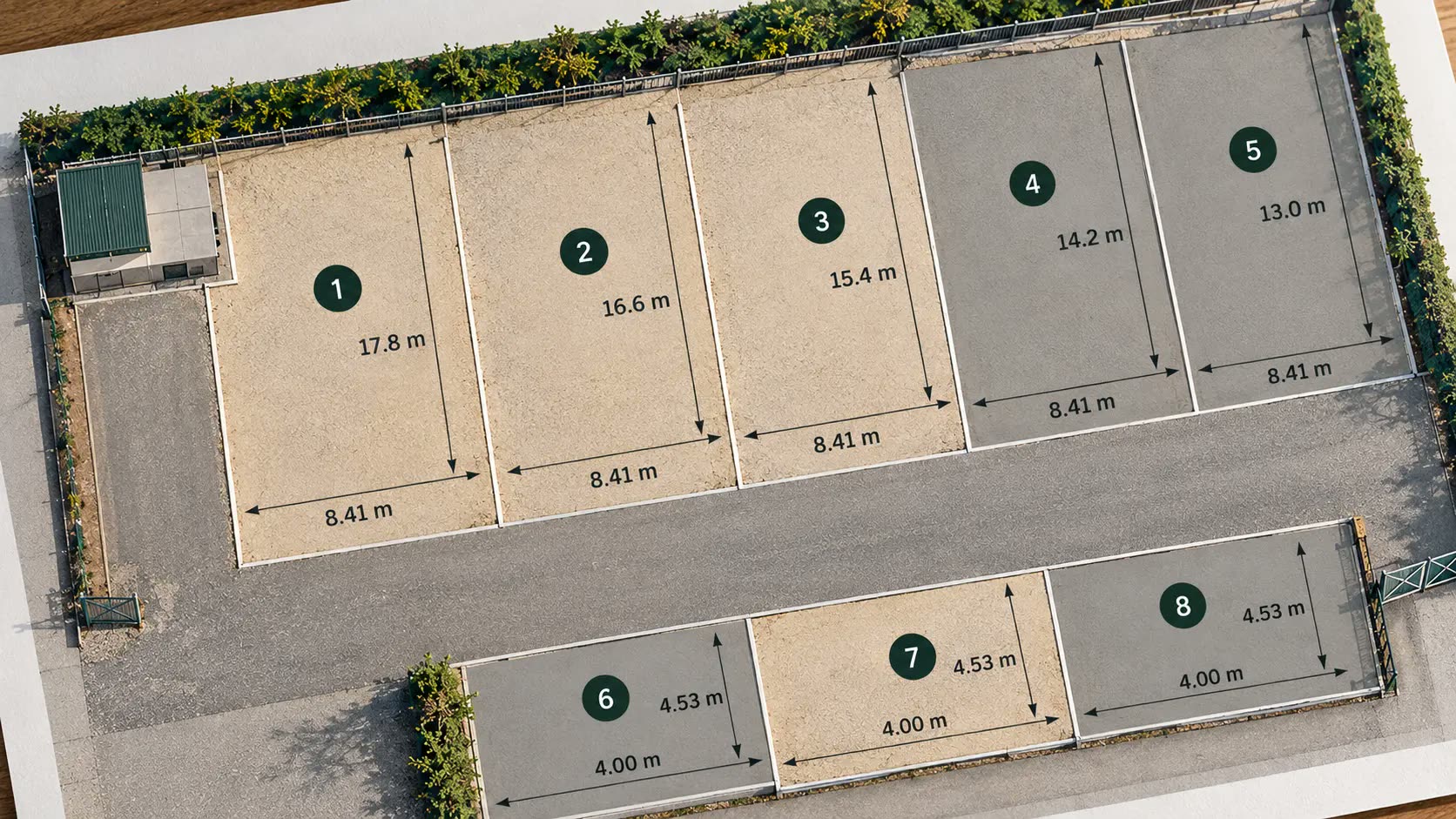
| Commercial yard space | From £250 per month, subject to permitted use, let as plots in a layout plan |
| Access | 24/7 access |
| Security | Monitored CCTV and concealed lock boxes |
Commercial yard space at York Storage
York Storage is based at The Old Station Works, Station Lane, Shipton by Beningbrough, York YO30 1BS, just north of York. The site offers commercial yard space from £250 per month, subject to permitted use, with plots allocated according to a layout plan of the yard.
The site provides 24/7 access, so businesses can collect vehicles, plant or materials outside standard working hours, which suits contractors and haulage operators whose schedules do not fit a nine to five pattern. Security is supported by monitored CCTV across the site and concealed lock boxes, both aimed at reducing the risk of theft of valuable plant, tools and equipment.
For businesses that also need a secure, weatherproof store alongside their yard space, York Storage's drive-up containers are available at £140 per month on a 2 month minimum term, sized at 20ft by 8ft by 8ft.
How to choose the right yard for your business
When comparing yard space options, it helps to think beyond price alone and consider how well a site fits your day to day operations.
- Location and travel time to and from your typical job sites or depot
- Whether the access hours match your working pattern
- Security measures in place, given the value of plant and vehicles typically stored
- Confirmation that the site's permitted use covers your intended activity
- Whether you need a container alongside the yard for smaller valuable items
- Flexibility of contract terms, in case your storage needs change
Taking the time to check these points before committing to a yard can save significant disruption later, particularly around planning and permitted use, which is not always obvious from simply looking at a piece of land.
If you are considering commercial yard space near York, speaking directly to the site operator about your specific vehicles, plant and working hours is the most reliable way to confirm whether a yard will work for your business.
Frequently asked questions
What is commercial yard space used for?
Commercial yard space is used for outdoor storage and parking needs that do not require an enclosed building. Common uses include parking vans, HGVs or trailers, storing plant and machinery, stockpiling materials, and keeping shipping containers used as mobile stores. It suits businesses that need secure outdoor capacity rather than indoor floor space.
Is yard space cheaper than renting an industrial unit?
Yard space is generally cheaper than a full industrial unit because it does not include a roof, internal floor space or building services. It suits businesses whose storage needs are mainly vehicles, plant or materials that can sit outdoors, rather than goods that need to be kept under cover.
Do I need planning permission to use land as a commercial yard?
Commercial use of land, including yard storage, is subject to UK planning rules, and storage or distribution uses generally fall under use class B8 in general terms. Whether a specific plot needs planning permission or already has the correct permitted use depends on the site's history, so this should always be checked before committing to a yard.
How much does commercial yard space cost in York?
At York Storage, commercial yard space is available from £250 per month, subject to permitted use. Exact pricing can depend on plot size and location within the yard layout plan, so it is best to ask directly for current availability and rates.
Can I store a shipping container on a commercial yard?
Yes, containers are a common feature on commercial yards and are often used as mobile stores, workshops or site offices. York Storage also offers its own drive-up containers, sized 20ft by 8ft by 8ft, for £140 per month on a 2 month minimum term, which can work alongside yard space.
What security measures should I look for in a yard?
Given how valuable plant, tools and vehicles can be, look for features such as monitored CCTV and secure, concealed lock boxes. Plant and tool theft is estimated to cost the UK construction industry over £800 million a year, so security provision is a genuinely important factor when choosing a yard.
Is there 24/7 access to commercial yard space?
At York Storage, commercial yard space benefits from 24/7 access, allowing businesses to collect or drop off vehicles, plant and materials outside standard working hours. This suits contractors, hauliers and tradespeople whose schedules do not fit a typical nine to five pattern.
What is the minimum contract length for yard space?
Contract terms can vary between providers and plot types, so it is worth asking directly about current terms for commercial yard space. For York Storage's drive-up containers specifically, the minimum term is 2 months.
Who typically rents commercial yard space?
Typical customers include builders, groundworkers, landscapers, haulage and recovery operators, market traders, and businesses needing container storage or overflow vehicle parking. It suits any business that needs secure outdoor storage without the cost of a full industrial unit.
Can HGVs access commercial yard space easily?
This depends on the individual site's layout, surface and turning space, so it is important to check with the operator whether a yard can accommodate the size of vehicle you use. Not every yard is designed with large vehicle manoeuvring in mind.
Where is York Storage's yard space located?
York Storage is located at The Old Station Works, Station Lane, Shipton by Beningbrough, York YO30 1BS, which is just north of York. This makes it accessible for businesses operating in and around the city as well as the surrounding rural area.
How do I enquire about renting yard space in York?
You can contact York Storage directly on 07561 446076 to ask about current yard plot availability, pricing and permitted use for your intended purpose. They can also advise on container options if you need enclosed storage alongside your yard space.
Does yard space come with a fixed deposit requirement?
Specific details on deposits are not something we can state generally, as this varies by provider and arrangement. Ask us directly for the current position on deposits for yard space or containers.
Is the yard space fenced or gated for added security?
Specific details on fencing and gated entry should be confirmed directly with the site, as this is not something we can generalise about accurately. York Storage can confirm the current security setup at its Shipton by Beningbrough site on request.
Need storage or yard space near York?
Drive-up containers from £140 per month and commercial yard space from £250 per month at Shipton by Beningbrough.
Sources
- Knight Frank, Industrial Open Storage Report 2024
- Cluttons, Industrial Market Update Autumn 2024
- Savills, Big Shed Briefing July 2024
- AJG / Gallagher, Combating Tools, Plant and Equipment Theft in Construction
- Clearway, The True Cost of Plant Theft on UK Construction Sites
- PIB Insurance, Construction plant theft is on the rise